
Intel Begins Adopting MS’s Driver Quality Initiative for Windows 11

A single faulty driver can destabilize or crash Windows 11. MS is therefore working with Intel, AMD, Nvidia, and other hardware partners to improve driver reliability. Intel is the first company observed implementing parts of these changes in publicly available driver updates.
Intel has confirmed that its GPU drivers are now fully compatible with Windows 11 26H2, potentially paving the way for graphics-driver improvements associated with MS’s Driver Quality Initiative (DQI).
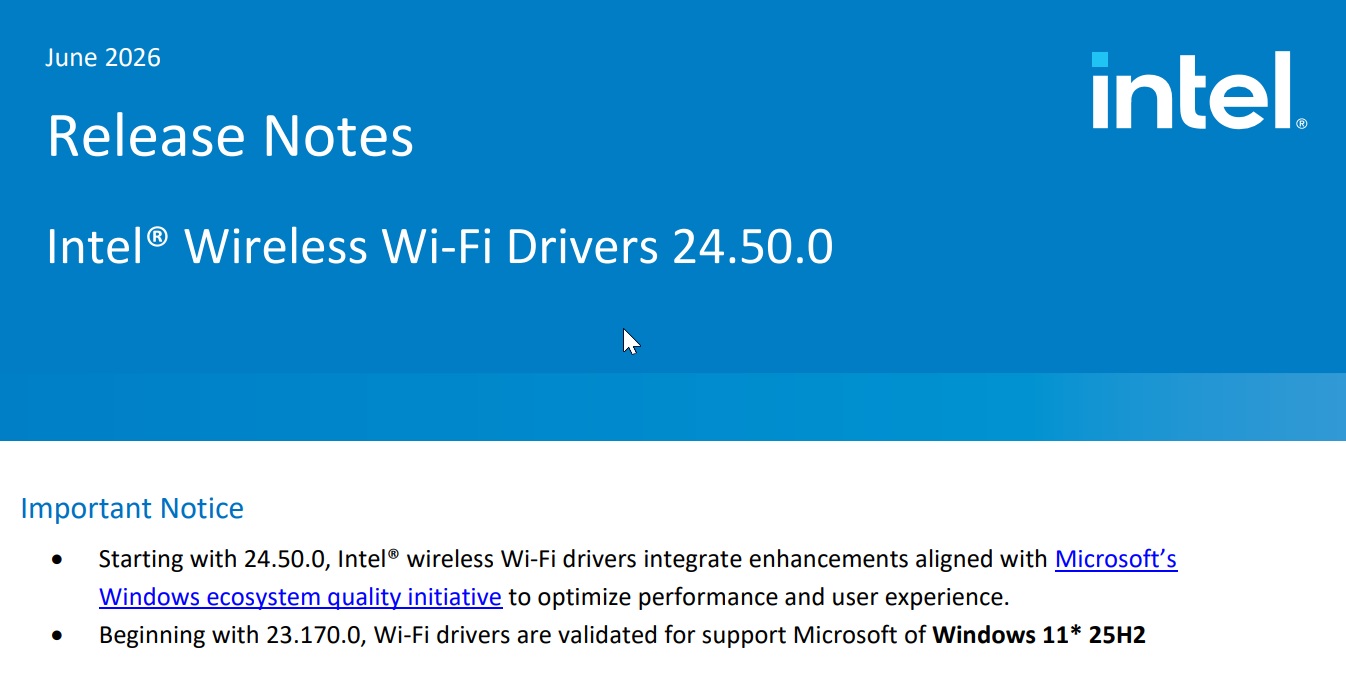
Intel’s Wi-Fi and Bluetooth drivers have already begun following MS’s updated guidelines for improving Windows stability, and similar changes could eventually reach the company’s GPU drivers.
Support for Windows 11 26H2 was quietly added to Intel’s GPU driver through the October 2026 update, version 32.0.101.9034.
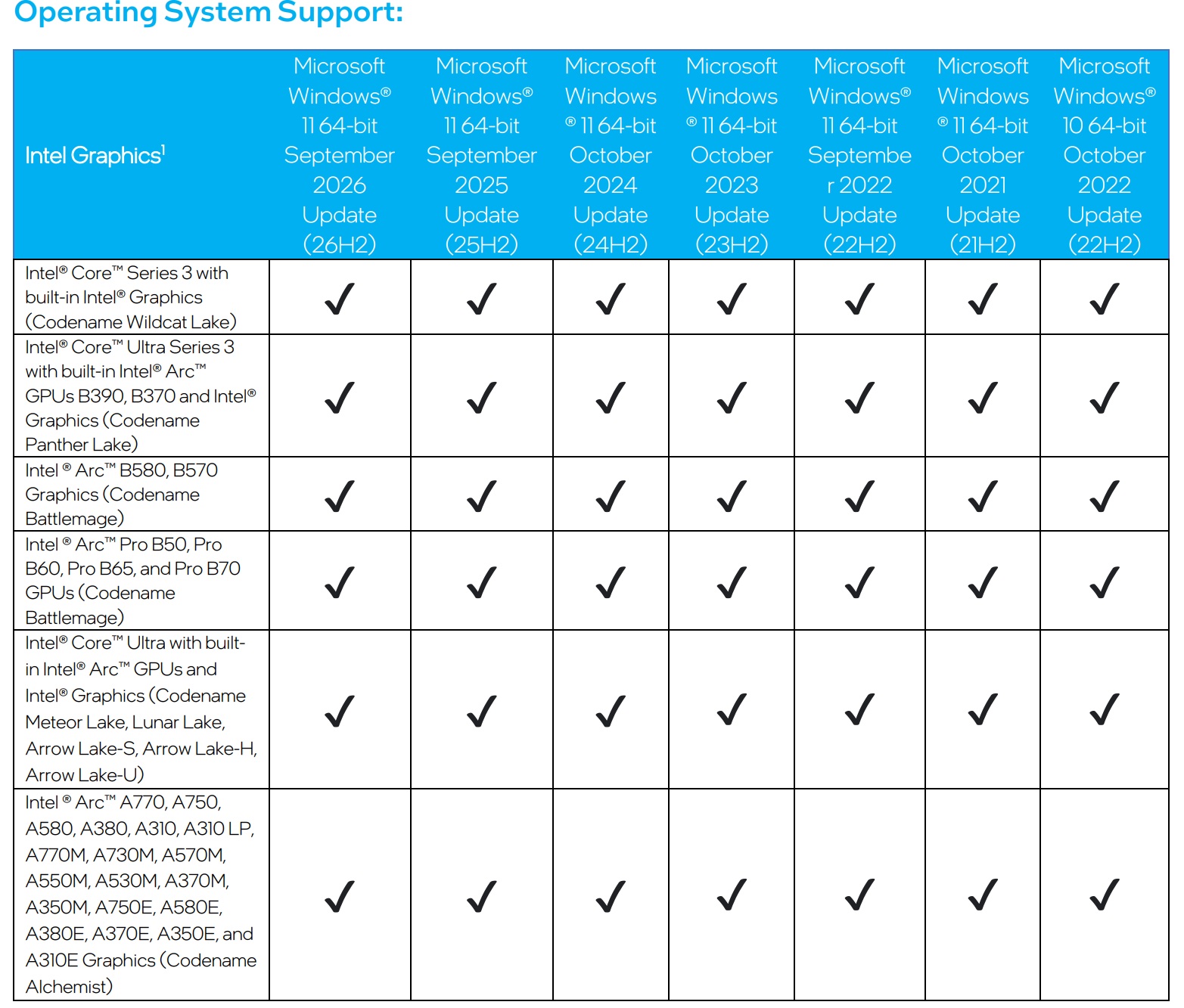
The next milestone will be optimizing these GPU drivers for MS’s Driver Quality Initiative. It remains unclear whether Intel’s legacy graphics drivers will receive the same treatment, but Intel Arc drivers are expected to be included.
Most original equipment manufacturers are reportedly testing DQI-aligned drivers internally, although these updates have not yet reached consumers. Intel appears to be the first company to incorporate some of this work into public releases.
Early testing indicates that Intel’s Wi-Fi and Bluetooth drivers already follow some DQI practices. However, many planned changes have not yet arrived and may require several months of additional development.
Intel’s Wi-Fi 24.50.0 release notes previously confirmed the introduction of “enhancements aligned with MS’s Windows ecosystem quality initiative” to improve performance and the overall user experience.
MS Cannot Improve Windows Stability Alone
In May 2026, MS revived the Windows Hardware Engineering Conference (WinHEC) after a lengthy hiatus. The previous event was held in 2018. Its return brought MS engineers and Windows hardware partners together to discuss the future of Windows drivers.
MS has acknowledged that it cannot improve quality across the Windows PC ecosystem by itself. Stability problems affect not only MS but also PC manufacturers such as Dell, Lenovo, and HP.

Apple has continued expanding its position in the United States, while the MacBook Neo has helped it move beyond its traditional strength in premium laptops. Windows received less attention for an extended period, and MS did not announce plans to revitalize the platform until March 2026.
MS has also recognized that Windows stability depends heavily on driver quality and application reliability.
Referring to commitments announced in March, MS stated in May that improving Windows quality “requires coordinated execution across the entire ecosystem.”
At WinHEC, MS confirmed that it had worked with industry partners to develop DQI. The initiative could become an important part of making Windows PCs substantially more stable.
Although Windows Update has caused problems, many incidents ultimately involve compatibility conflicts with third-party drivers. Similar issues have previously affected Intel drivers and Windows updates on Dell PCs.
MS remains responsible when a Windows update introduces a bug. However, the company argues that lasting improvement requires a “comprehensive, ecosystem-wide effort designed to fundamentally raise the bar on driver quality, reliability and security across Windows.”
DQI is intended to support that ecosystem-wide effort. Dell Technologies Distinguished Engineer Syam Poluri emphasized the importance of collaboration:
“Great platforms aren’t built in isolation. Platform quality depends on early, honest collaboration across OEMs, ODMs, silicon partners and IHVs. WinHEC brings engineers together with MS to align early, solve real problems and deliver higher-quality solutions for our shared customers.”
MS reinforced that position by explaining how customers perceive driver failures:
“When drivers are high quality, customers experience reliable, secure, performant devices. When drivers fail, customers experience it as a device problem, regardless of where the root cause sits.”
DQI Does Not Require Windows 11 Drivers to Be Rebuilt from Scratch
MS is not asking hardware manufacturers to recreate every Windows 11 driver. Such an approach would be impractical, and DQI does not introduce major visual changes. Instead, the initiative focuses on improving how drivers are designed, validated, maintained, and measured.
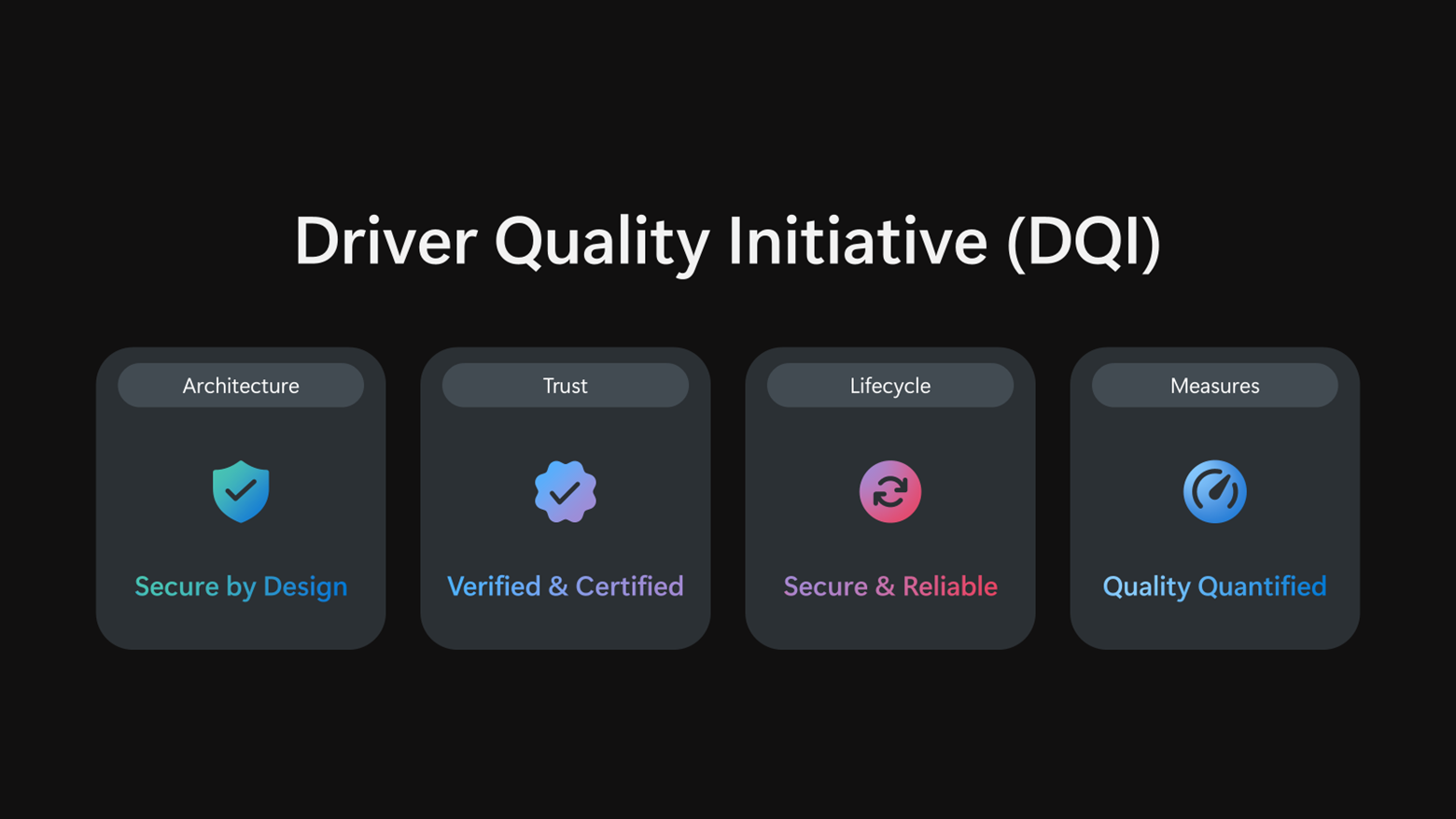
DQI is organized around four main pillars:
- Architecture: Reduce unnecessary dependence on kernel-mode drivers and use safer alternatives where possible.
- Trust: Apply stricter certification requirements to trusted partners and drivers.
- Lifecycle: Improve long-term driver maintenance and remove outdated or low-quality drivers from Windows Update.
- Quality measures: Evaluate drivers using broader criteria, including stability, functionality, performance, power consumption, and thermal impact.
These principles will not be limited to Intel. MS has asked its broader partner ecosystem—including AMD, Qualcomm, Nvidia, and PC manufacturers—to adopt the framework.
MS describes DQI as a partnership: “MS is building the frameworks, tools and quality signals, and we are working with partners to raise driver quality across the ecosystem so customers can rely on their Windows devices from day one through the full life of the PC.”
The framework is based on lessons from MS’s Windows Resiliency Initiative (WRI), rather than being an isolated set of policies.
Moving Drivers Away from the Windows Kernel
Many drivers, including numerous anti-cheat drivers, operate inside the Windows kernel. If one of these kernel-mode drivers fails, it can crash the entire operating system. This can result in a blue screen that directly identifies the affected driver.
The problem is not limited to anti-cheat software. Less common third-party drivers can also interfere with the Windows kernel and destabilize the operating system.
MS explains the risk directly in its documentation: “If a kernel-mode driver crashes, it causes the entire operating system to crash.”
Where possible, MS is encouraging developers to replace third-party kernel-mode drivers with user-mode drivers or MS-authored class drivers. Kernel-mode drivers that remain necessary are expected to receive additional hardening.
According to MS, this approach is intended to deliver better driver security, reliability, and resiliency. User-Mode Driver Framework drivers can improve operating-system stability because they can access only the address space of the process in which they operate.
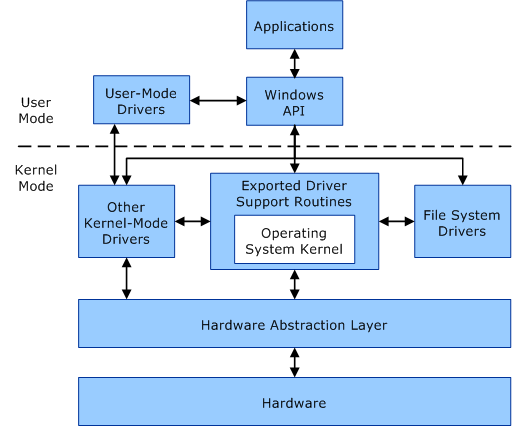
MS’s user-mode driver investments include performance improvements for PCIe devices with DMA support. However, only driver developers can convert their software to use a user-mode architecture.
MS has also promised improvements to the Wi-Fi stack, while its class-driver investments include expanded audio support.
Expanding MS-Authored Class Drivers
MS’s storage-driver documentation explains that each system-supplied storage class driver is designed for a particular type of peripheral and tested against devices from multiple vendors.
Current class-driver investments include the SoundWire Device Class for Audio (SDCA), an I3C class driver, an NCM USB Ethernet class driver, and continued enhancements to existing first-party class drivers in Windows 11.
Stricter Certification and Driver Lifecycle Management
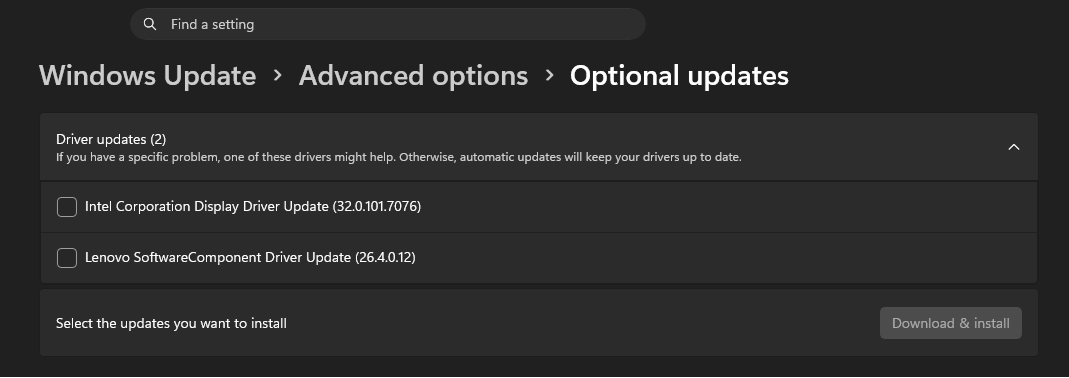
Windows drivers have long faced concerns involving both performance and security. Although MS already certifies drivers, DQI is expected to introduce stricter checks for trusted partners and certified drivers.
The initiative’s lifecycle pillar also focuses on removing outdated and low-quality drivers from the Windows Update catalog.
Broader Driver Quality Measurements
The final DQI pillar expands driver-quality assessment beyond crash frequency. MS plans to evaluate drivers according to stability, functionality, performance, power consumption, and thermal impact.
Together, these measures are intended to improve driver reliability throughout the entire life of a Windows PC while reducing the likelihood that a single faulty driver can destabilize the operating system.